Understanding inflation and investments is one of the most important skills every investor must learn to protect wealth and achieve long-term financial goals.
Inflation and Investments are closely connected, yet many beginner investors underestimate how much inflation can affect their financial future.
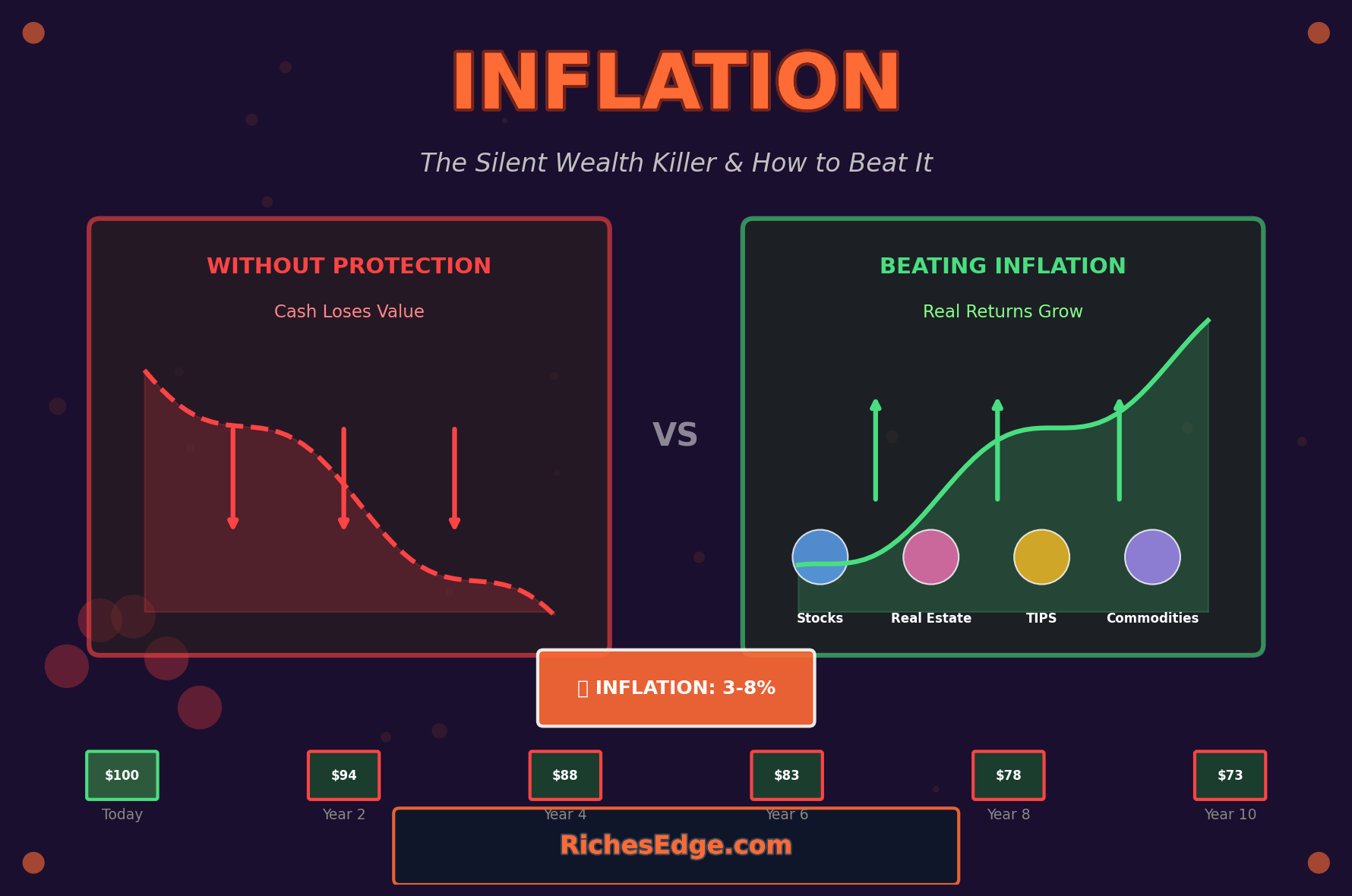
Inflation slowly reduces the purchasing power of money. What you can buy with ₹100 today may cost ₹120 or more in the future. If your investments do not grow faster than inflation, your money actually loses value over time.
This is why understanding how inflation affects investments is critical for anyone who wants to build long-term wealth.
The good news is that smart investors can use specific strategies to protect their investments from inflation and even benefit from it.
In this guide, you will learn:
- What inflation really means
- How inflation impacts different types of investments
- Which investments perform better during inflation
- Practical strategies to beat inflation
Let’s begin by understanding the basics.
What is Inflation
Inflation refers to the increase in prices of goods and services over time.
When inflation rises, the value of money decreases because you need more money to buy the same products.
For example:
If inflation is 6% per year, an item costing ₹1,000 today may cost ₹1,060 next year.
Over long periods, inflation can significantly reduce the real value of money.
Example:
If ₹1,00,000 is kept in cash for 10 years with inflation at 6%, its purchasing power could drop significantly.
This is why simply saving money in a bank account is often not enough.
Investors must ensure their investments generate returns higher than inflation.
Why Inflation Matters for Investors
Inflation is one of the most important factors affecting investment returns.
When inflation rises, it affects:
- Real returns on investments
- Cost of living
- Interest rates
- Market performance
Investors must always consider inflation-adjusted returns, also called real returns.
Real Return Formula:
Real Return = Investment Return – Inflation Rate
Example:
Investment return = 10%
Inflation rate = 6%
Real return = 4%
Even though the investment earned 10%, the actual growth in purchasing power is only 4%.
This concept highlights the strong connection between Inflation and Investments.
How Inflation Affects Your Investments
Inflation influences different investments in different ways.
Some investments suffer during inflation, while others perform better.
Here are the major effects.
Reduced Purchasing Power
The most direct impact of inflation is the decline in purchasing power.
Money saved without growth becomes less valuable over time.
Lower Real Returns
Even investments generating returns can lose value if the inflation rate is high.
Example:
Investment return = 7%
Inflation = 6%
Real growth = only 1%.
Rising Interest Rates
Central banks often raise interest rates to control inflation.
Higher interest rates affect bonds, loans, and stock markets.
Market Volatility
Inflation can cause uncertainty in financial markets, leading to price fluctuations.
Understanding the inflation impact on investments helps investors prepare better.
Inflation Impact on Different Asset Classes
Different investments react differently to inflation.
Cash and Savings Accounts
Risk Level: Very Low
Inflation Impact: High
Savings accounts usually offer low interest rates.
If inflation rises faster than interest rates, the real value of money declines.
Fixed Deposits
FDs provide stable returns but often struggle to beat inflation over long periods.
Bonds
Inflation reduces the value of fixed bond payments.
However, some inflation-protected bonds can provide better protection.
Stocks
Stocks historically perform better than inflation over long periods.
Companies often increase prices of products, which increases revenue and profits.
Real Estate
Real estate values and rental income tend to rise with inflation.
Gold
Gold is often considered a hedge against inflation because its value usually rises during economic uncertainty.
These examples demonstrate the relationship between inflation vs investment returns.
Best Investments to Beat Inflation
Smart investors choose assets that historically outperform inflation.
Here are some commonly used options.
Equity Mutual Funds
Equity funds invest in stocks and offer higher growth potential.
Over long periods, equities have historically outperformed inflation.
Stocks
Investing directly in strong companies can generate long-term wealth.
Businesses often increase prices during inflation, protecting profitability.
Real Estate
Property prices and rental income tend to rise along with inflation.
Gold
Gold often performs well during economic instability.
It helps diversify portfolios and reduce risk.
Inflation-Protected Bonds
Some government bonds adjust returns based on inflation rates.
These instruments help protect purchasing power.
These options can help investors beat inflation investing challenges.
Strategies to Protect Investments from Inflation
Experienced investors use several strategies to manage inflation risk.
Diversification
Diversification spreads investments across multiple asset classes.
Example diversified portfolio:
Stocks – 50%
Mutual Funds – 25%
Gold – 10%
Real Estate – 10%
Cash – 5%
Diversification reduces risk and improves stability.
Long-Term Investing
Short-term market movements can be unpredictable.
Long-term investing allows investments to grow beyond inflation.
Regular Investing
Systematic Investment Plans (SIPs) help investors invest consistently regardless of market conditions.
Investing in Growth Assets
Growth assets like stocks have higher potential to outpace inflation.
Rebalancing Portfolio
Investors should periodically review and adjust portfolios based on market conditions.
These strategies help protect against the inflation impact on investments.
Common Mistakes Investors Make During Inflation
Many investors make emotional or uninformed decisions when inflation rises.
Holding Too Much Cash
Cash loses value quickly during inflation.
Avoiding Equity Investments
Fear of stock market volatility prevents many investors from benefiting from long-term growth.
Lack of Diversification
Investing in only one asset class increases financial risk.
Ignoring Inflation in Financial Planning
Many investors focus only on nominal returns instead of real returns.
Avoiding these mistakes helps improve financial stability.
Practical Tips for Beginner Investors
If you are new to investing, follow these practical tips.
Start Investing Early
The earlier you start investing, the more time your money has to grow.
Focus on Long-Term Goals
Investments designed for long-term growth are better suited to beat inflation.
Invest Consistently
Regular investing helps average market costs.
Monitor Inflation Trends
Understanding economic trends helps investors make better decisions.
Build a Diversified Portfolio
Diversification is one of the most powerful tools for reducing risk.
Related Articles
- Emergency Fund in India: Ultimate Step-by-Step Guide to Build Financial Safety in 2026
- Common Investment Mistakes Beginners Should Avoid in 2026
Final Thoughts
Inflation is an unavoidable part of every economy, and it directly affects how money grows over time.
Understanding the relationship between Inflation and Investments allows investors to protect their wealth and build stronger financial strategies.
Instead of letting inflation reduce the value of your money, you can use smart investment choices to stay ahead.
Remember:
Successful investing is not only about earning returns.
It is about earning returns that are higher than inflation.
When investors combine knowledge, discipline, and diversification, they can protect purchasing power and achieve long-term financial success.
Frequently Asked Questions About Inflation and Investments
How do inflation and investments affect long-term wealth?
Inflation and investments are closely connected because inflation reduces the purchasing power of money over time. If your investments grow slower than inflation, the real value of your money decreases. This is why investors focus on choosing investments that generate returns higher than inflation.
Which investments perform best during inflation?
Some investments historically perform better when inflation rises. Stocks, equity mutual funds, real estate, and gold often provide better protection against inflation. These assets have the potential to grow faster than inflation and help maintain purchasing power.
Can inflation reduce investment returns?
Yes, inflation can reduce the real return on investments. For example, if your investment earns 8% annually but inflation is 6%, your real return is only 2%. This is why understanding the relationship between inflation and investments is essential for long-term financial planning.
How can beginners protect investments from inflation?
Beginners can protect their portfolios by diversifying investments across multiple asset classes such as stocks, mutual funds, gold, and real estate. Long-term investing and regular contributions through SIPs are also effective strategies to manage the impact of inflation and investments.
Is keeping money in savings accounts safe during inflation?
Savings accounts offer safety but usually provide low interest rates. When inflation rises, the purchasing power of money in savings accounts declines. This is why investors often combine savings with growth-oriented investments to balance inflation and investments effectively.