Asset Allocation is one of the most powerful yet often overlooked concepts in investing. Whether you are a beginner starting your investment journey or someone trying to build long-term wealth, understanding Asset Allocation can significantly improve your portfolio performance while reducing risk.
Many investors focus on picking the “best stocks” or “top mutual funds,” but experienced investors know that how you divide your investments across different asset classes matters far more than individual investment selection.
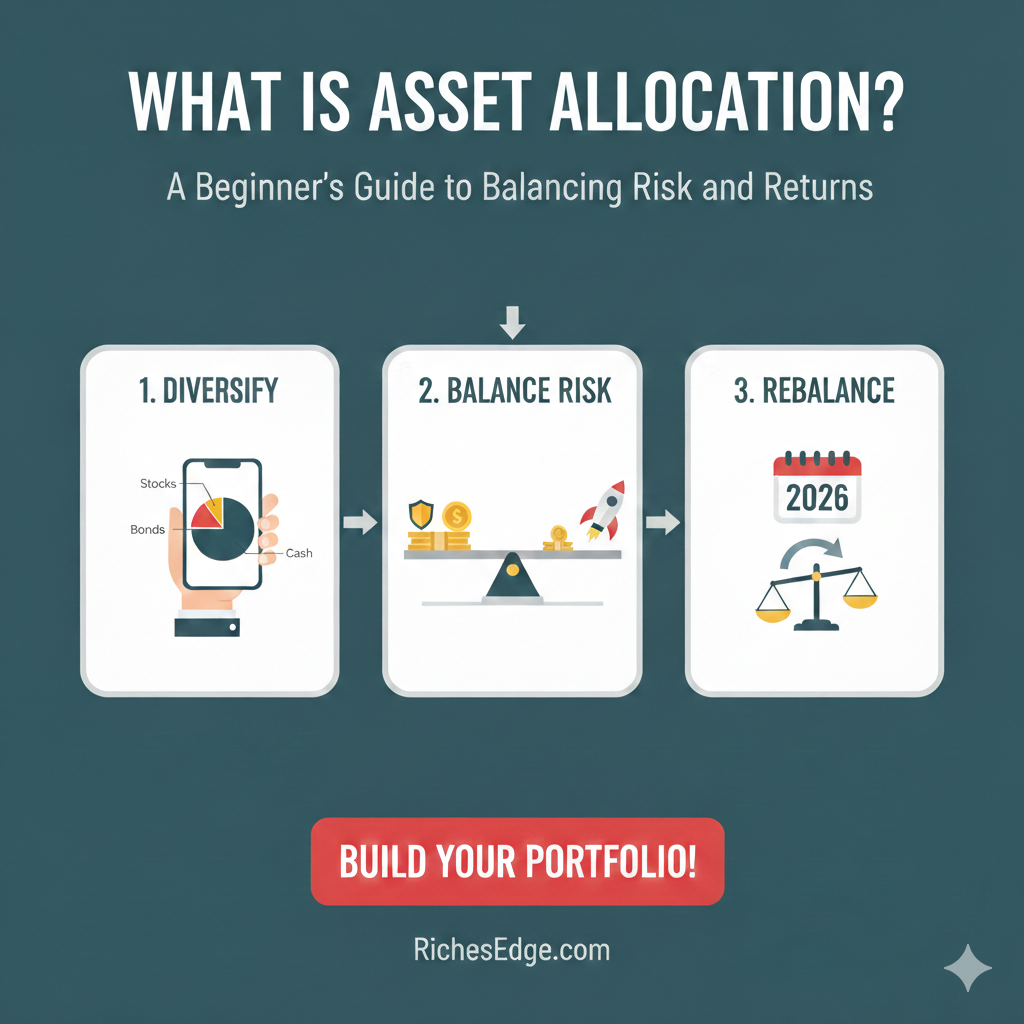
In simple words, Asset Allocation means spreading your money across different types of investments such as stocks, bonds, and other assets to balance risk and potential returns.
A well-designed Asset Allocation strategy protects your portfolio from market volatility and ensures steady growth over time.
In this beginner-friendly guide, you will learn:
- What Asset Allocation is
- Why it matters for investors
- Different types of asset classes
- Popular Asset Allocation strategies
- How beginners can create their own portfolio
By the end of this article, you’ll clearly understand how to balance risk and return using smart Asset Allocation techniques.
What Is Asset Allocation?
Asset Allocation refers to how an investor divides their investment portfolio among different asset classes.
Instead of putting all your money into one investment, Asset Allocation spreads your money across multiple investment categories.
The main objective is simple:
Maximize returns while minimizing risk.
For example, an investor might allocate:
- 60% Stocks
- 30% Bonds
- 10% Cash
This allocation ensures that even if one asset performs poorly, other assets can stabilize the portfolio.
Financial experts often say:
“Asset Allocation determines more than 80% of portfolio performance.”
This is why professional investors spend a lot of time designing the right allocation strategy.
Why Asset Allocation Is Important
A well-planned investment distribution strategy plays a crucial role in long-term investing success. Instead of putting all your money into one type of investment, spreading funds across different asset classes helps reduce risk and improve portfolio stability.
Below are some key reasons why investors should follow a balanced portfolio approach.
1. Risk Management
Different asset classes react differently to market conditions.
For example, stocks may decline during market downturns, while bonds or gold may remain stable or even rise. By spreading investments across multiple assets, investors can reduce the overall risk of their portfolio.
This diversification approach helps cushion losses during periods of market volatility.
2. Portfolio Stability
A balanced investment mix helps maintain stability in your portfolio.
When one type of investment performs poorly, another may perform better and offset the losses. This balance reduces extreme fluctuations and makes long-term investing more manageable.
3. Long-Term Wealth Creation
A properly structured portfolio allows investors to achieve steady financial growth over time.
Combining growth assets like equities with stable assets such as bonds helps create a balance between potential returns and safety.
This approach supports sustainable wealth creation while protecting investments from sudden market shocks.
4. Emotional Discipline
Market volatility often triggers emotional decisions among investors.
A structured portfolio strategy helps investors stay disciplined and avoid panic selling during market declines. Following a predefined plan encourages long-term thinking instead of reacting to short-term market movements.
Types of Asset Classes in Asset Allocation
Understanding different asset classes is essential for creating a balanced portfolio.
1. Stocks (Equities)
Stocks represent ownership in companies and offer the highest potential returns.
Advantages:
- High growth potential
- Beat inflation in the long run
Risk:
- High volatility
Stocks are usually ideal for long-term investors and younger investors.
2. Bonds (Fixed Income)
Bonds are loans given to governments or companies.
They provide stable returns and lower risk compared to stocks.
Advantages:
- Predictable income
- Lower volatility
They are suitable for risk-averse investors.
3. Cash and Cash Equivalents
These include:
- Savings accounts
- Money market funds
- Fixed deposits
Cash provides liquidity and safety, but returns are generally lower.
4. Alternative Assets
Alternative assets include:
- Gold
- Real estate
- Commodities
- REITs
These assets help diversify portfolios and protect against inflation.
How Asset Allocation Balances Risk and Returns
Different assets respond differently to economic conditions.
For example:
| Economic Condition | Stocks | Bonds | Gold |
|---|---|---|---|
| Economic Growth | High returns | Moderate | Stable |
| Market Crash | High fall | Stable | Often rises |
| Inflation | Moderate | Low | Strong |
Because of this behavior, Asset Allocation ensures that your entire portfolio does not depend on one asset class.
Instead of trying to time the market, Asset Allocation focuses on building a resilient portfolio.
Popular Asset Allocation Strategies
Investors follow different strategies depending on their goals and risk tolerance.
1. Strategic Asset Allocation
This involves maintaining a fixed portfolio allocation over time.
Example:
- 60% stocks
- 30% bonds
- 10% cash
Investors periodically rebalance their portfolio to maintain these percentages.
2. Tactical Asset Allocation
This strategy allows investors to temporarily adjust allocations based on market conditions.
For example:
Increase stock exposure when markets are undervalued.
3. Dynamic Asset Allocation
This is an active approach where investors continuously adjust allocations depending on market trends.
4. Age-Based Asset Allocation
A simple rule used by many investors:
100 – Age = Stock Allocation
Example:
Age 30 → 70% stocks
Age 50 → 50% stocks
This strategy gradually reduces risk as investors approach retirement.
Factors That Influence Asset Allocation
There is no universal Asset Allocation strategy.
It depends on multiple factors.
Risk Tolerance
Your ability to handle market fluctuations.
High risk tolerance → more equities
Low risk tolerance → more bonds
Investment Goals
Goals may include:
- Retirement
- Buying a house
- Children’s education
Each goal may require different allocation strategies.
Investment Horizon
The longer your investment horizon, the more equity exposure you can take.
Long-term investors can tolerate market volatility.
Financial Situation
Income, savings, and liabilities also affect Asset Allocation decisions.
Example of Asset Allocation Portfolio
Here’s a sample beginner portfolio.
| Asset Class | Allocation |
|---|---|
| Equity Mutual Funds | 50% |
| Debt Mutual Funds | 25% |
| Gold ETFs | 10% |
| Cash / FD | 15% |
This portfolio balances growth, safety, and liquidity.
Asset Allocation vs Diversification
Many beginners confuse these two concepts.
They are related but different.
Asset Allocation
Distribution of investments across asset classes.
Example:
Stocks, bonds, gold.
Diversification
Spreading investments within each asset class.
Example:
Investing in multiple stocks instead of one.
Both strategies together create a strong investment portfolio.
Common Asset Allocation Mistakes
Even experienced investors make mistakes.
Ignoring Rebalancing
Market movements change allocation percentages.
Rebalancing restores the original allocation.
Overconcentration
Investing too much in one asset class increases risk.
Following Market Hype
Investors often chase trending investments without proper allocation.
Ignoring Risk Tolerance
Copying someone else’s portfolio without considering personal risk capacity.
Tips for Beginners
If you’re new to investing, follow these simple tips.
Start Simple
Begin with a basic 60/30/10 allocation.
Invest Through Mutual Funds or ETFs
Mutual funds provide automatic diversification.
Rebalance Annually
Review your portfolio once a year.
Stay Consistent
Asset Allocation works best with long-term discipline.
Frequently Asked Questions About Asset Allocation
What is the best investment allocation strategy?
The best investment strategy depends on factors such as your risk tolerance, financial goals, and investment horizon. Younger investors may prefer a higher exposure to equities for growth, while conservative investors may choose a balanced portfolio with more fixed-income investments.
Why is portfolio allocation important in investing?
A well-balanced portfolio helps reduce overall risk by spreading investments across different asset classes like stocks, bonds, and other instruments. This approach protects investors from relying too heavily on a single investment type and helps maintain stability during market fluctuations.
Related Article:
Read our detailed guide on Power of Compounding: How Small Investments Create Long-Term Wealth
Final Thoughts
A well-balanced investment strategy is one of the most important principles in successful investing.
Instead of constantly trying to predict market movements, experienced investors focus on building a diversified and structured portfolio.
By spreading investments across multiple asset classes, this approach helps investors:
- Reduce overall risk
- Improve portfolio stability
- Achieve long-term financial goals
For beginners, understanding how to structure a diversified portfolio early can significantly improve investment outcomes over time.
Remember:
Smart investing is not about chasing the highest returns. It is about managing risk carefully while allowing your wealth to grow steadily.
Following a disciplined portfolio strategy can help you stay consistent, avoid emotional decisions, and build long-term financial security.
To learn more about investment guidelines, visit: