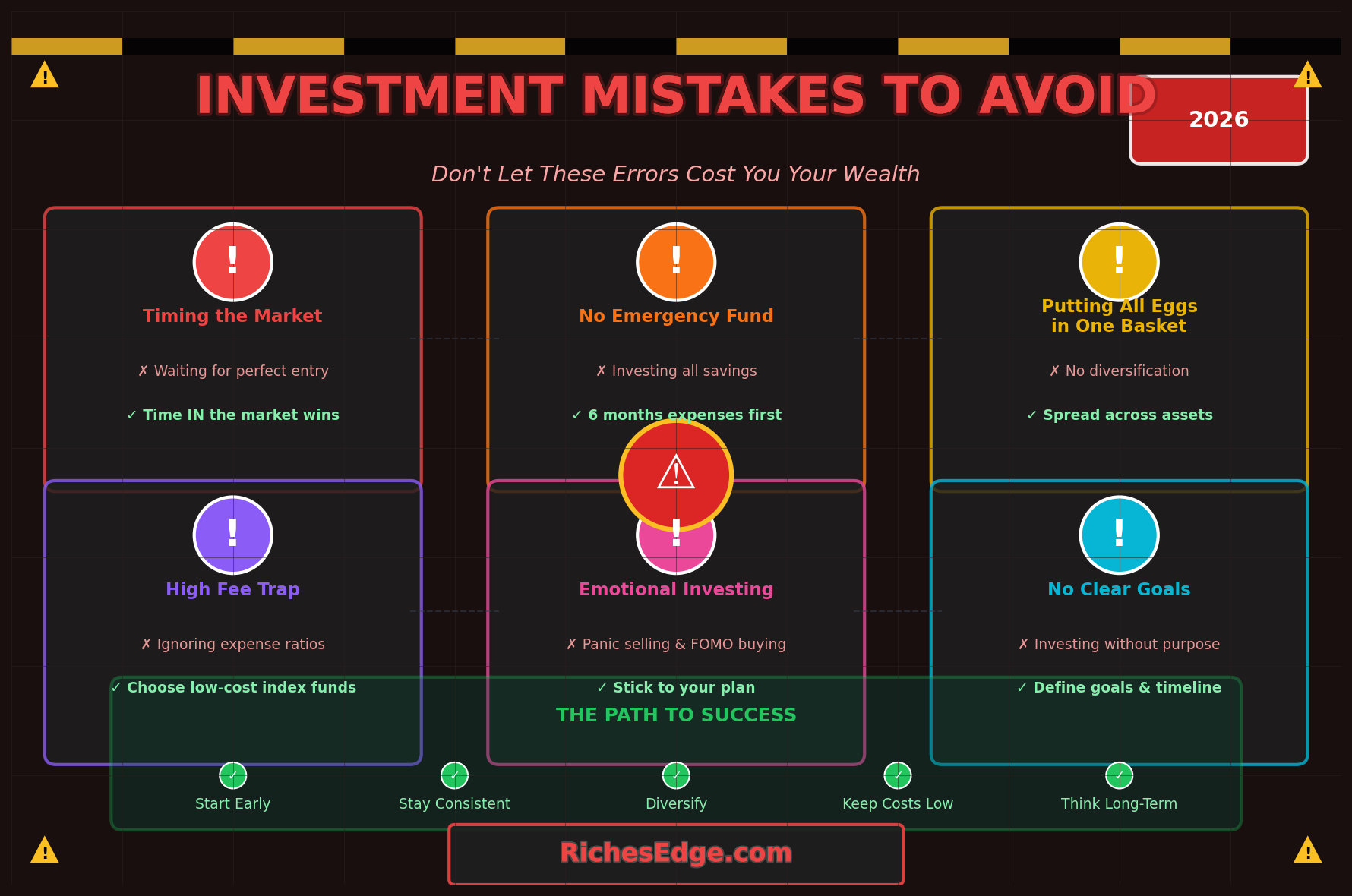
Introduction
Investment Mistakes Beginners Should Avoid — if you’re just starting your investing journey in 2026, this is something you simply cannot ignore.
Investing is one of the most powerful ways to build long-term wealth. But here’s the reality: most beginners lose money not because investing is risky — but because they make avoidable mistakes.
Think of investing like learning to drive 🚗
You don’t crash because roads are dangerous — you crash because of poor decisions.
In this guide, we’ll walk you through the most common investment mistakes beginners should avoid, with real-life examples, practical tips, and easy explanations.
Whether you’re investing in mutual funds, stocks, or SIPs — this guide will help you avoid costly errors and grow your money smarter.
1. Investing Without a Clear Goal
One of the biggest investment mistakes beginners should avoid is investing without knowing why they are investing.
🎯 Why this is a problem:
- No direction
- Poor decision-making
- Panic during market volatility
💡 Example:
Ravi invests ₹5,000 monthly but has no goal. When the market drops, he stops investing — losing long-term benefits.
✅ Solution:
Define goals like:
- Retirement
- Buying a house
- Child’s education
👉 Always align your investments with your financial goals.
2. Not Understanding What You Invest In
Many beginners invest based on tips, social media, or friends’ advice.
🚨 Reality:
If you don’t understand your investment, you’re basically gambling.
💡 Example:
Investing in a mutual fund without knowing:
- Risk level
- Asset allocation
- Returns history
✅ Solution:
Before investing, understand:
- How it works
- Risks involved
- Expected returns
👉 Knowledge reduces fear and mistakes.
3. Trying to Time the Market
Trying to buy low and sell high sounds great — but it’s extremely difficult.
📉 Truth:
Even experts struggle to time the market.
💡 Example:
A beginner waits for a “perfect dip” — but the market keeps rising.
✅ Solution:
- Invest regularly (SIP)
- Focus on long-term growth
👉 Time in the market beats timing the market.
4. Lack of Diversification
Putting all your money into one stock or asset is risky.
📊 Why it’s dangerous:
- Higher losses
- Unpredictable returns
💡 Example:
Investing all savings in one stock that crashes.
✅ Solution:
Diversify across:
- Equity
- Debt
- Gold
👉 Diversification reduces risk and improves stability.
5. Emotional Investing
Fear and greed are your biggest enemies.
😨 Common behaviors:
- Selling during market crash
- Buying during market hype
💡 Example:
Selling stocks during a dip — missing recovery.
✅ Solution:
- Stay calm
- Follow a strategy
- Avoid panic decisions
👉 Discipline beats emotions in investing.
6. Ignoring Risk Tolerance
Every investor has a different risk capacity.
⚠️ Mistake:
Choosing high-risk investments without understanding your comfort level.
💡 Example:
A conservative investor invests in volatile stocks and panics.
✅ Solution:
Know your:
- Age
- Income
- Financial goals
👉 Invest according to your risk tolerance.
7. Following the Crowd
“Everyone is investing in this stock!” — sounds familiar?
🚫 Problem:
Crowd behavior leads to bubbles and losses.
💡 Example:
Buying trending stocks at peak price.
✅ Solution:
- Do your own research
- Avoid herd mentality
👉 Smart investors think independently.
8. Overtrading
Frequent buying and selling can hurt returns.
📉 Why?
- Transaction costs
- Emotional stress
- Poor decisions
💡 Example:
Daily trading without strategy.
✅ Solution:
- Invest long-term
- Avoid unnecessary trades
👉 Less is more in investing.
9. Ignoring Fees and Expenses
Small fees can eat your returns over time.
💸 Examples:
- Expense ratio
- Brokerage charges
💡 Example:
1% extra fee can reduce long-term returns significantly.
✅ Solution:
- Choose low-cost funds
- Compare fees
👉 Always check hidden costs.
10. Not Staying Consistent
Consistency is key to wealth creation.
📉 Mistake:
Stopping investments during market downturns.
💡 Example:
Skipping SIPs during a crash — missing recovery gains.
✅ Solution:
- Stay invested
- Continue SIPs
👉 Wealth grows with patience and consistency.
How to Avoid Investment Mistakes Beginners Should Avoid (Step-by-Step Strategy)
Avoiding investment mistakes beginners should avoid is not difficult if you follow a structured approach. Here’s a simple step-by-step strategy to invest smarter in 2026:
🪜 Step 1: Set Clear Financial Goals
Define short-term and long-term goals like buying a house, retirement, or emergency funds.
📊 Step 2: Choose the Right Investment
Select investment options based on your risk tolerance and time horizon.
💸 Step 3: Start with SIP
Systematic Investment Plans help reduce market timing risks and build discipline.
🔍 Step 4: Research Before Investing
Always understand where your money is going. Avoid blindly following trends.
⚖️ Step 5: Diversify Your Portfolio
Spread your investments across equity, debt, and gold to reduce risk.
🔄 Step 6: Review and Rebalance
Check your portfolio every 6–12 months and adjust if needed.
👉 Following these steps can significantly reduce the chances of making investment mistakes beginners should avoid and help you build long-term wealth confidently.
Bonus Tips for Beginners
Here are some additional tips to avoid investment mistakes beginners should avoid:
✔️ Start Early
Time is your biggest advantage.
✔️ Invest Regularly
SIP helps build discipline.
✔️ Keep Learning
Financial knowledge is power.
✔️ Review Portfolio
Track performance regularly.
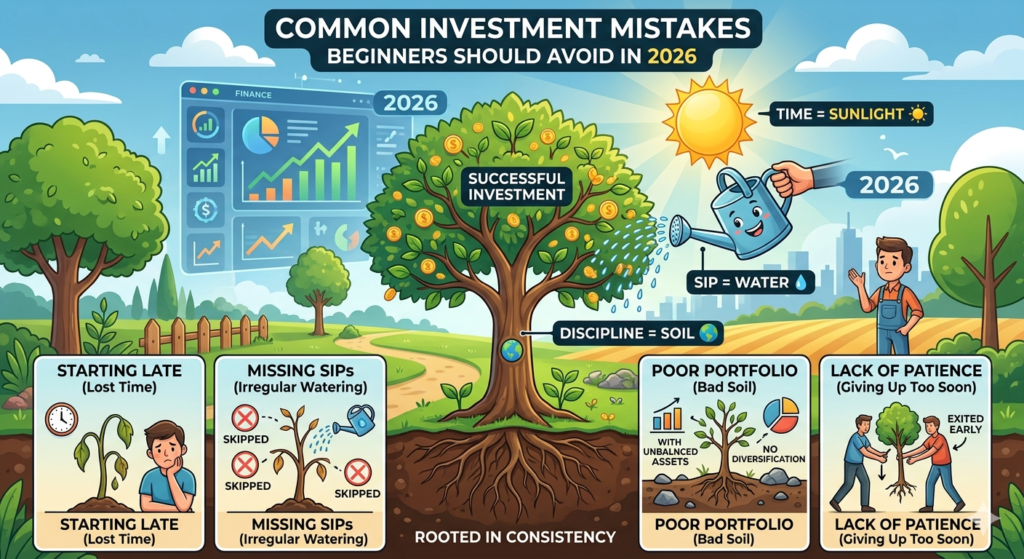
Visual Representation
Imagine your investments like planting a tree 🌱
- SIP = Water 💧
- Time = Sunlight ☀️
- Discipline = Soil 🌍
Without consistency, your tree won’t grow.
Real-Life Examples of Investment Mistakes Beginners Should Avoid
Understanding real-world scenarios can make it easier to avoid investment mistakes beginners should avoid. Here are a few practical examples:
👨💼 Example 1: The Panic Seller
Amit invested ₹1 lakh in equity funds. When the market dropped by 15%, he panicked and sold everything — only to see the market recover within months.
👉 Mistake: Emotional investing
👉 Lesson: Stay invested for long-term growth
👩💻 Example 2: The Trend Follower
Neha invested in trending stocks without research because everyone was talking about them.
👉 Mistake: Following the crowd
👉 Lesson: Always do your own research
👨🎓 Example 3: The Overconfident Beginner
Rahul started trading daily after small profits and ended up losing most of his capital.
👉 Mistake: Overtrading
👉 Lesson: Focus on long-term investing
👉 These examples clearly highlight why understanding investment mistakes beginners should avoid is crucial for every new investor.
FAQs
Q1. What is the biggest investment mistake beginners make?
The biggest mistake is investing without knowledge and clear goals.
Q2. Is it safe to invest in 2026?
Yes, if done wisely with proper research and diversification.
Q3. How can beginners avoid losses?
By avoiding emotional decisions, diversifying, and investing long-term.
Q4. Should beginners invest in SIP?
Yes, SIP is one of the safest and easiest ways to start investing.
How can beginners avoid investment mistakes beginners should avoid in 2026?
Beginners can avoid investment mistakes beginners should avoid by setting clear financial goals, diversifying their portfolio, investing consistently through SIPs, and avoiding emotional decisions. It is also important to research thoroughly before investing and focus on long-term wealth creation instead of short-term gains.
External Resources for Financial Learning
For official information about financial planning and investor awareness, you can explore:
Do Follow External Links:
These organizations provide reliable financial education resources.
Related Articles
- Emergency Fund in India: Ultimate Step-by-Step Guide to Build Financial Safety in 2026
- How Inflation Affects Your Investments (And How to Beat It)
- What Is Asset Allocation? A Beginner’s Guide to Balancing Risk and Returns
Final Thoughts
Understanding investment mistakes beginners should avoid can save you from costly errors and financial stress.
Remember:
- Investing is a journey, not a race
- Mistakes are common — but avoidable
- Discipline and patience are your biggest assets
👉 Smart investing is not about making quick money — it’s about building sustainable wealth over time.