What Are Mutual Funds?
Best mutual funds for beginners in India are one of the simplest ways to start investing without deep market knowledge.
A mutual fund pools money from multiple investors and invests it in stocks, bonds, or other assets. These funds are managed by professional fund managers, making them ideal for beginners.
In India, mutual funds are regulated by Securities and Exchange Board of India and promoted by Association of Mutual Funds in India, ensuring investor protection and transparency.
👉 Instead of picking individual stocks, you invest in a diversified portfolio.
Why Beginners Should Invest in Mutual Funds
If you’re new to investing, mutual funds offer several advantages:
✔️ 1. Professional Management
Experts handle your investments.
✔️ 2. Diversification
Reduces risk by spreading investments.
✔️ 3. Low Investment Requirement
Start with as low as ₹500 via SIP.
✔️ 4. Liquidity
Easy to buy and sell units.
✔️ 5. Disciplined Investing
SIP helps build long-term wealth.
Types of Mutual Funds for Beginners
Understanding fund types is key to choosing the best mutual funds for beginners in India.
🔹 1. Equity Mutual Funds
- Invest in stocks
- High risk, high return
- Best for long-term investors
🔹 2. Debt Mutual Funds
- Invest in bonds
- Low risk
- Stable returns
🔹 3. Hybrid Funds
- Mix of equity + debt
- Balanced risk
🔹 4. Index Funds
- Track market indices like Nifty 50
- Low cost, passive investing
🔹 5. ELSS Funds
- Tax-saving mutual funds
- Lock-in: 3 years
Best Mutual Funds for Beginners in India (2026)
Here are some beginner-friendly categories (not recommendations but guidance):
⭐ Index Funds (Low Risk, Beginner Friendly)
- Nifty 50 Index Funds
- Sensex Index Funds
👉 Ideal for those who want simple and low-cost investing
⭐ Large Cap Funds
- Invest in top companies
- Stable and less volatile
👉 Best for first-time investors
⭐ Hybrid Funds
- Balanced exposure
- Moderate risk
👉 Suitable for risk-averse beginners
⭐ ELSS Funds
- Tax benefits under 80C
- Good returns + savings
👉 Best for tax-saving beginners
How to Start Investing in Mutual Funds in India
Starting is easier than you think:
Step 1: Complete KYC
Use PAN + Aadhaar
Step 2: Choose Investment Platform
- AMC website
- Apps like Groww, Zerodha Coin
Step 3: Select Fund Type
Start with index or hybrid funds
Step 4: Start SIP
Invest monthly (₹500+)
Step 5: Monitor Regularly
Review every 6–12 months
Explore Related Topic: Start Investing with ₹5,000 in India (Beginner Guide)
Real-Life Example of Best Mutual Funds for Beginners in India
Let’s understand how the best mutual funds for beginners in India actually work with a simple real-life example.
👤 Example:
Rahul, a 25-year-old working professional, wants to start investing but has no prior experience in the stock market.
He chooses one of the best mutual funds for beginners in India, such as a Nifty 50 Index Fund, and starts a SIP of ₹3,000 per month.
📊 After 10 Years:
- Monthly Investment: ₹3,000
- Total Investment: ₹3,60,000
- Expected Return (12% avg): ₹6,90,000+
👉 That’s nearly 2x growth, thanks to compounding.
💡 Key Takeaway:
Even small investments in the best mutual funds for beginners in India can create significant wealth over time.
How to Choose the Best Mutual Funds for Beginners in India
Selecting the best mutual funds for beginners in India can feel confusing, but a simple checklist can make it easy.
✅ 1. Check Fund Type
Start with:
- Index Funds
- Large Cap Funds
- Hybrid Funds
These are considered the best mutual funds for beginners in India due to lower risk.
✅ 2. Look at Expense Ratio
Lower expense ratio = higher returns over time
✅ 3. Check Past Consistency
Avoid chasing top performers
Look for stable long-term returns
✅ 4. Fund Manager Experience
Experienced managers handle market volatility better
✅ 5. Risk Level
Always match fund risk with your comfort level
👉 Following this checklist helps you confidently pick the best mutual funds for beginners in India.
Expected Returns from Best Mutual Funds for Beginners in India
Before investing, it’s important to understand realistic returns from the best mutual funds for beginners in India.
📈 Average Returns by Fund Type:
| Fund Type | Expected Returns |
|---|---|
| Index Funds | 10% – 12% |
| Large Cap Funds | 10% – 13% |
| Hybrid Funds | 8% – 10% |
| ELSS Funds | 12% – 15% |
Growth of Best Mutual Funds for Beginners in India
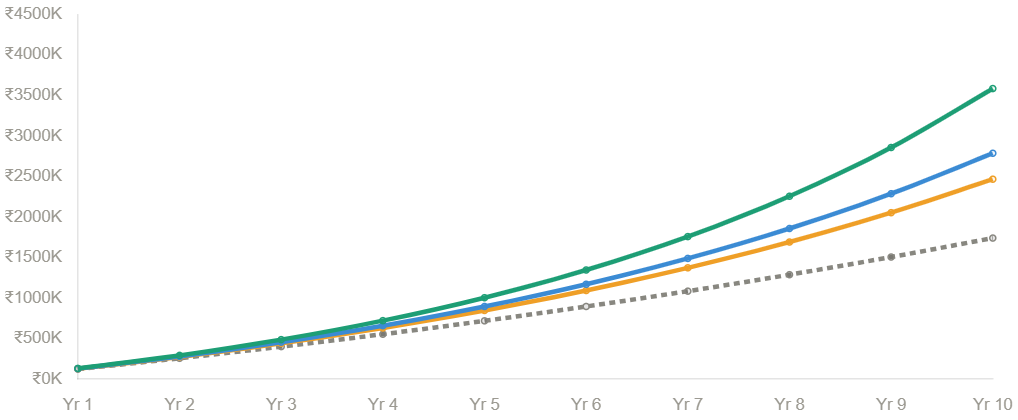
Investing in the best mutual funds for beginners in India through SIP shows steady growth over time. Even small monthly investments benefit from compounding, turning consistent contributions into significant wealth over the long term.
SIP vs Lump Sum Investment
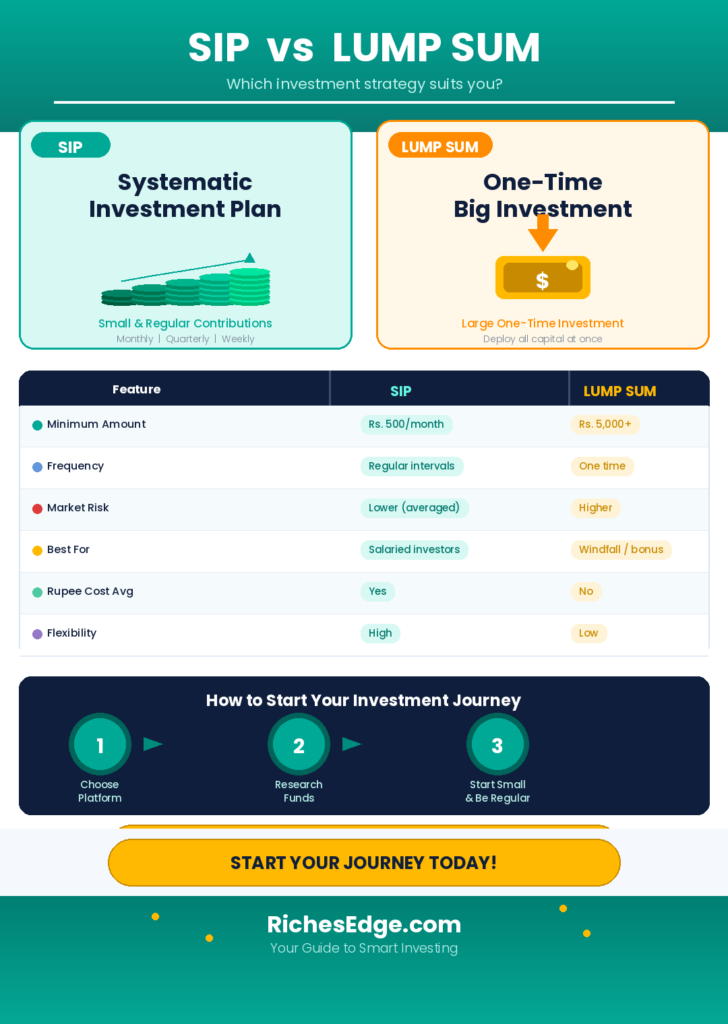
🔹 SIP (Systematic Investment Plan)
- Invest monthly
- Reduces risk
- Best for beginners
🔹 Lump Sum
- One-time investment
- Suitable in market dips
👉 Recommendation: Beginners should start with SIP
Common Mistakes Beginners Should Avoid
Even while choosing the best mutual funds for beginners in India, mistakes can happen.
❌ 1. Chasing High Returns
Past performance ≠ future returns
❌ 2. Ignoring Risk Profile
Choose funds matching your goals
❌ 3. Investing Without Goal
Always define purpose
❌ 4. Stopping SIP Early
Consistency is key
❌ 5. Over-diversification
Too many funds = confusion
Expert Tips for Beginners
💡 Start Early
Time = wealth
💡 Stay Consistent
Regular investing beats timing
💡 Think Long-Term
Minimum 5+ years horizon
💡 Keep Costs Low
Choose low expense ratio funds
💡 Review Annually
Adjust based on goals
⚠️ Important Note:
The best mutual funds for beginners in India do not guarantee returns.
Markets fluctuate, but long-term investing reduces risk.
💡 Pro Insight:
If you stay invested for 5–10 years, even the best mutual funds for beginners in India can deliver strong and stable returns.
FAQs (Add This Section Before Conclusion)
❓ Which mutual fund is best for beginners in India?
Index funds and hybrid funds are best due to low risk and simplicity.
❓ How much should a beginner invest?
Start with ₹500–₹2000/month via SIP.
❓ Is mutual fund safe?
They are market-linked but relatively safer than direct stocks.
❓ Can I lose money?
Yes, but risk reduces over long-term investing.